
Echoes
Echoes
Deborah Howard
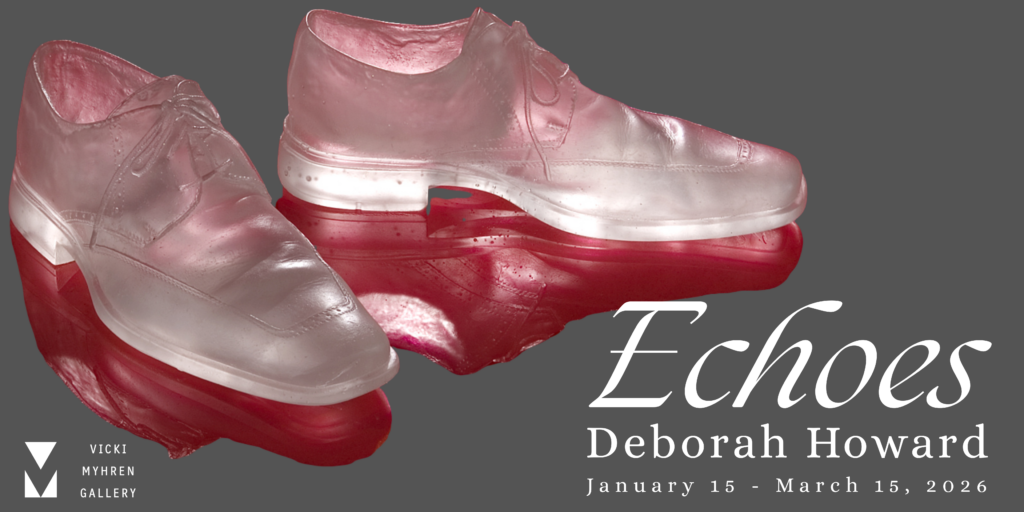
On view at the Vicki Myhren Gallery from January 15 – March 15, 2026.
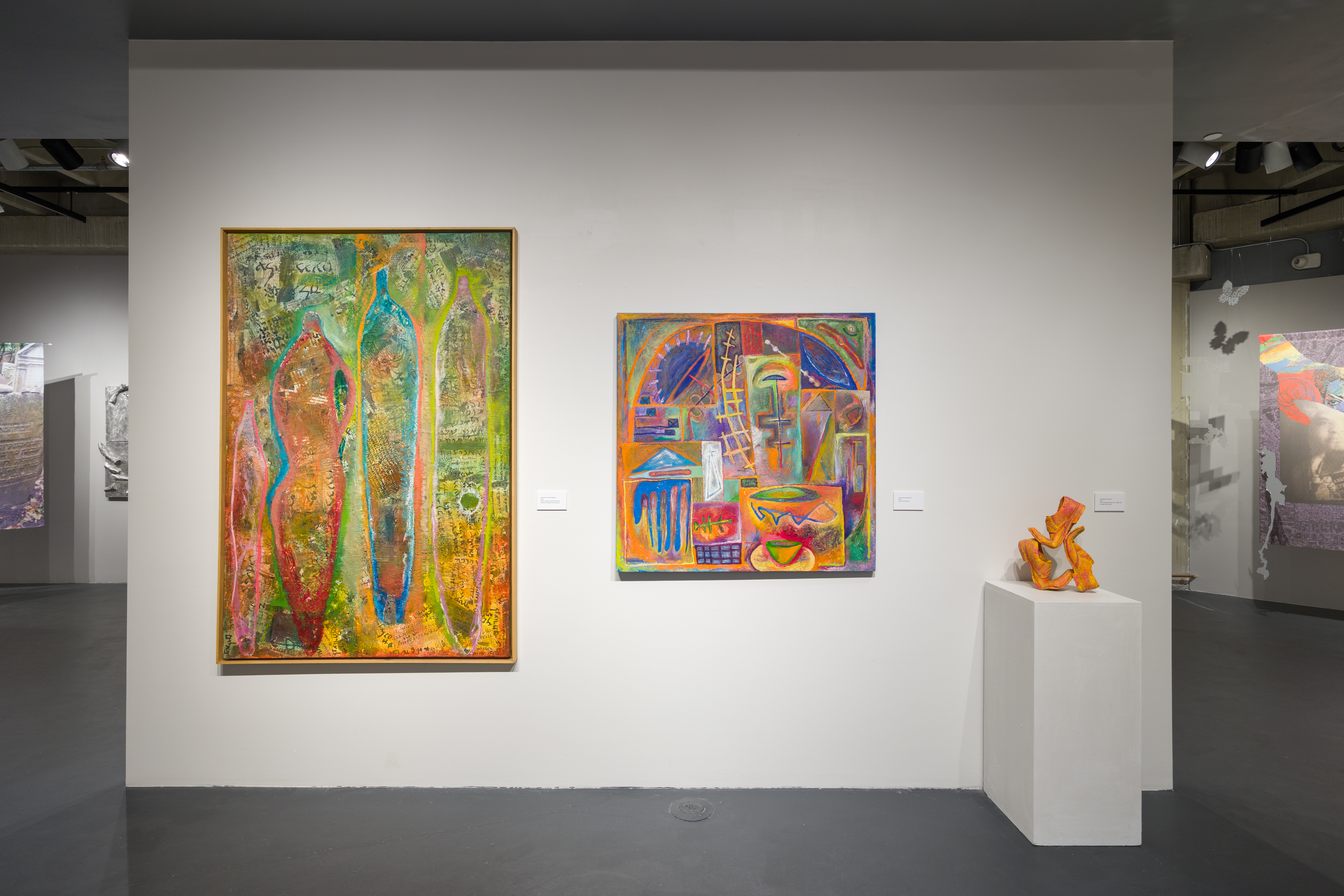
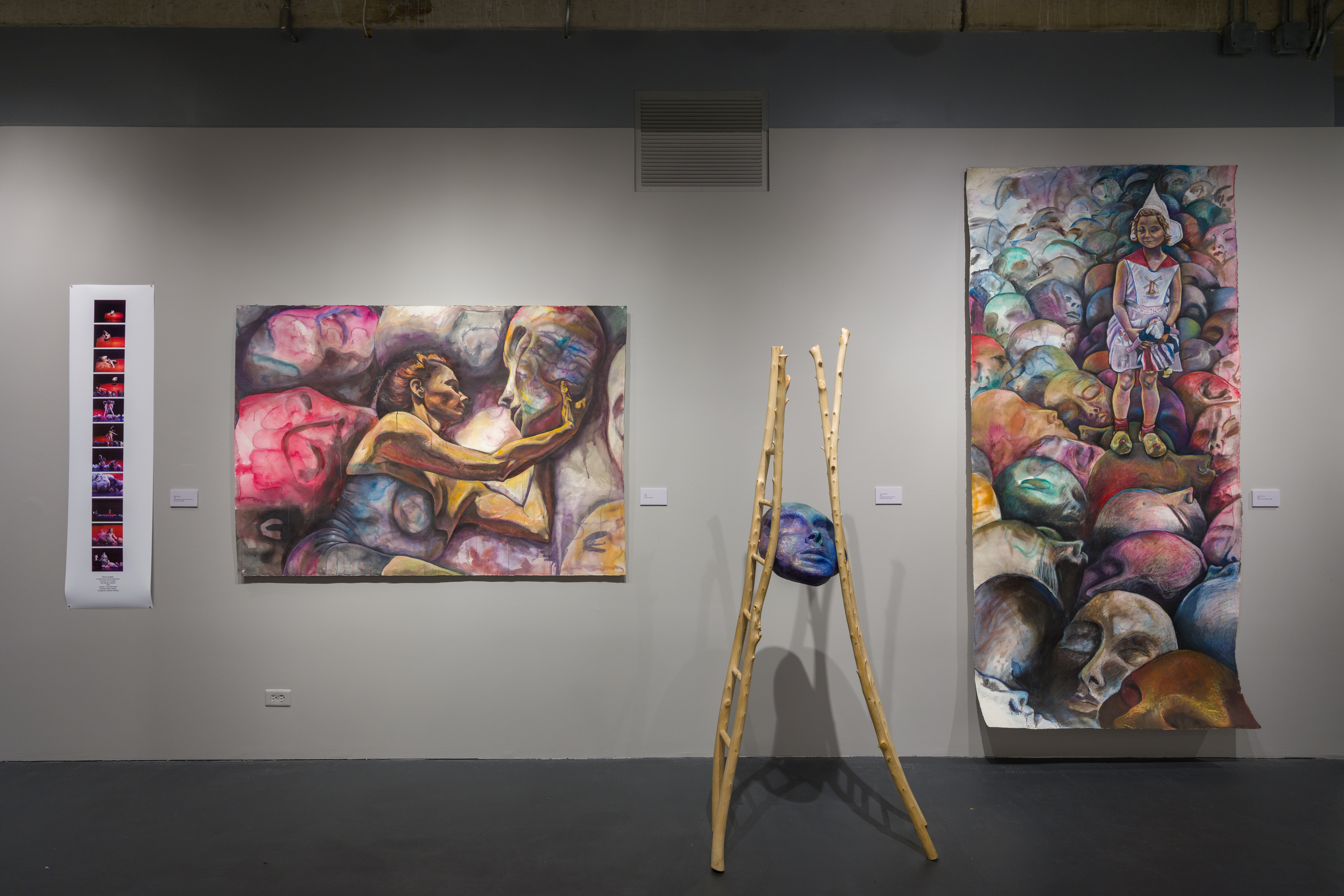
For more than four decades, Deborah Howard has sustained a practice rooted in careful looking, historical consciousness, and profound empathy. Working fluidly across drawing, painting, printmaking, and sculpture, Deborah returns again and again to the human presence, sometimes through the figure itself, and at other times through recurring leitmotifs that stand in for lived experience. Drawing, the bedrock of her practice, functions as both an ethical and material commitment: intimate, vulnerable, and insistently present. Whether portraying survivors of the Holocaust, tracing migratory histories embedded in architecture and landscape, or activating sculptural forms that speak to collective movement and memory, her work resists the abstraction of experience. Instead, it insists on individuality, dignity, and continuity across time. As Deborah has written, the artist becomes a witness–recording not only likeness, but lived history and shared humanity.
This exhibition marks both an artistic milestone and moment of gratitude, as Deborah retires after almost forty years as a transformative presence at the University of Denver. While she is widely recognized as a painter, her early training in printmaking and her collaborative spirit have shaped a deeply interdisciplinary approach, one that has inspired generations of students to think expansively about medium, process, and responsibility. Her collaborative projects, including works developed across distance and disciplines, reflect a generosity of practice mirrored in her teaching. It is a privilege to present this body of work at a moment of transition, not as a conclusion, but as an echo: of lives observed, histories honored, students mentored, and a practice that continues to resonate beyond the classroom and the studio.
Artist Talk
Hear Deborah talk about her artistic practice, teaching, and the exhibition Echoes.
Alumni Artists Honor Deborah
Alongside Deborah’s exhibition in the Vicki Myhren Gallery, DU’s Davis Gallery presented an exhibition of alumni artists who studied with Deborah, Journeys: DU Alumni Artists, 1987-2025Journeys: DU Alumni Artists, 1987-2025. Click the button below to see their artwork and read their tributes to Deborah.
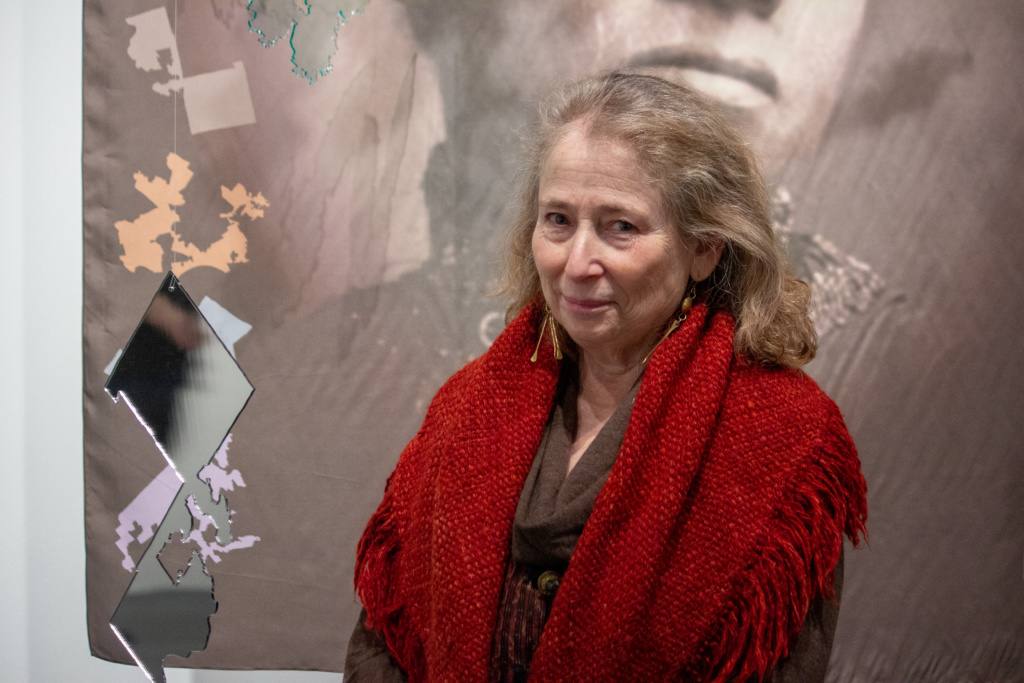
My first memory of wonder was when my father held a large conch shell to my ear and told me I would hear the ocean. I heard the waves of nearby Lake Michigan. This experience was the beginning of my search for answers through art. Sometimes people walk before they talk. I drew before I talked. When I was a child, my mother would find scraps of paper scattered around our apartment with drawings of a nose, or a mouth, or an eye. Drawing is my first language. I feel most alive when I’m drawing.
My work focuses on human experience related to migration, heritage, and memory. Whether the ideas take the form of a vessel, a gestural stroke of paint, a shoe, or a portrait, the drama of human experience is always here. I have no allegiance to any one medium or material and choose whatever best communicates the particular idea of feeling I want to convey.
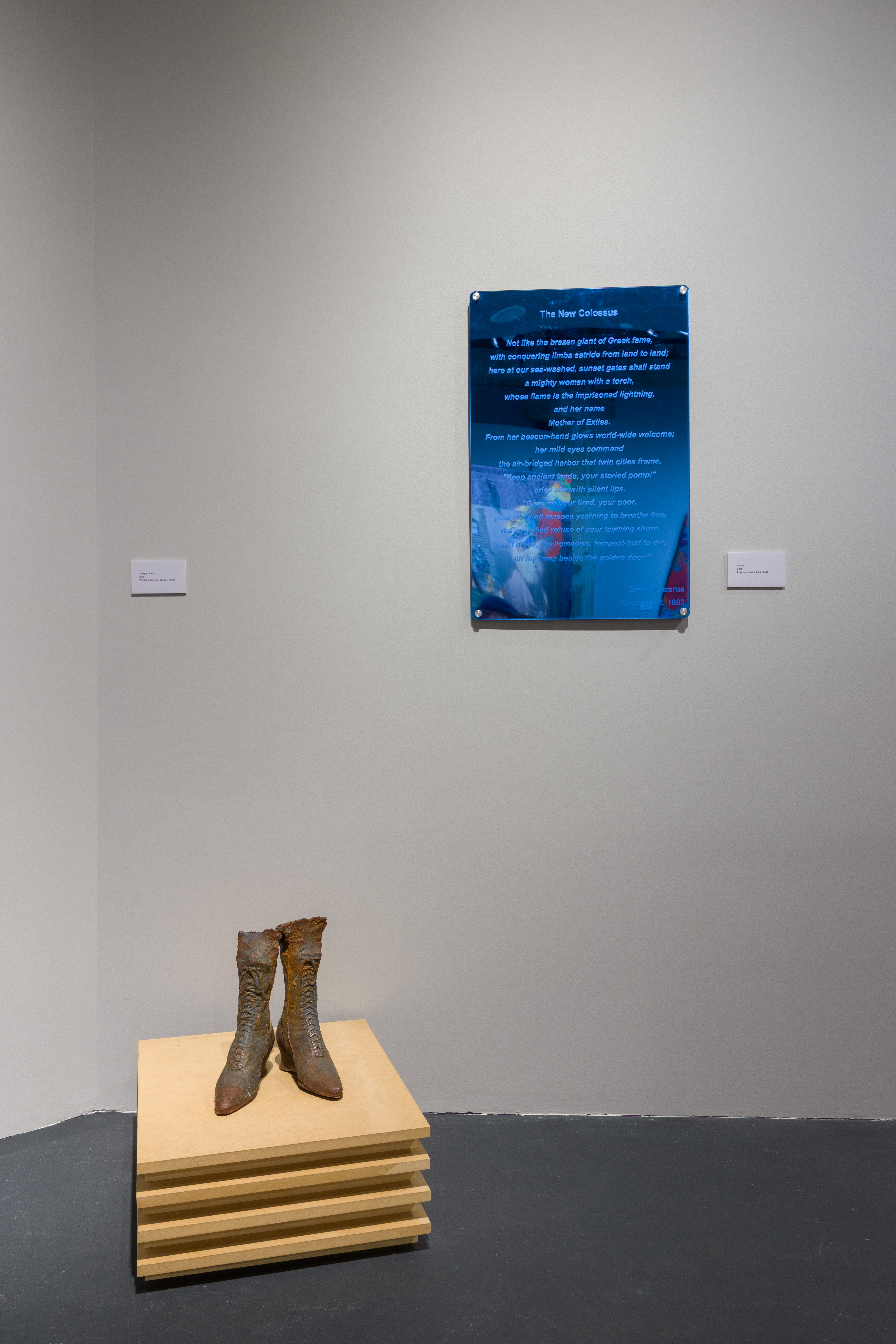
Many of my recent artworks include the same pair of boots. This was never a limitation, rather they created endless possibilities. Each time I made a new artwork with the boots, the meaning and feeling changed. The repetition of the same subject allows for progressive transfiguration. Visual repetition is akin to the sound of an echo, which moves on and transforms, gradually becoming a whisper, never completely dying because the artist can hear it.
I have learned from the many inspiring artists who have visited our department. A highlight was when I brought in the painter Leon Golub many years ago. When he met with students he said, “If your teacher is telling you that you are putting too much red in your paintings, put in more.”
My goal in the painting program has been to help students to find joy in making meaningful art that expresses their beliefs and feelings, and to provide them with the skills to become independent, self-directed artists. I created courses, a painting classroom, and senior studios that are safe places for students to freely express their individuality. The students and these safe spaces have helped me to be a stronger educator.
As I “graduate” and go on to my next chapter at this difficult moment in time, the things I will miss most are the creative energy of students, the freedom of expression, the safe spaces, and my remarkable colleagues.
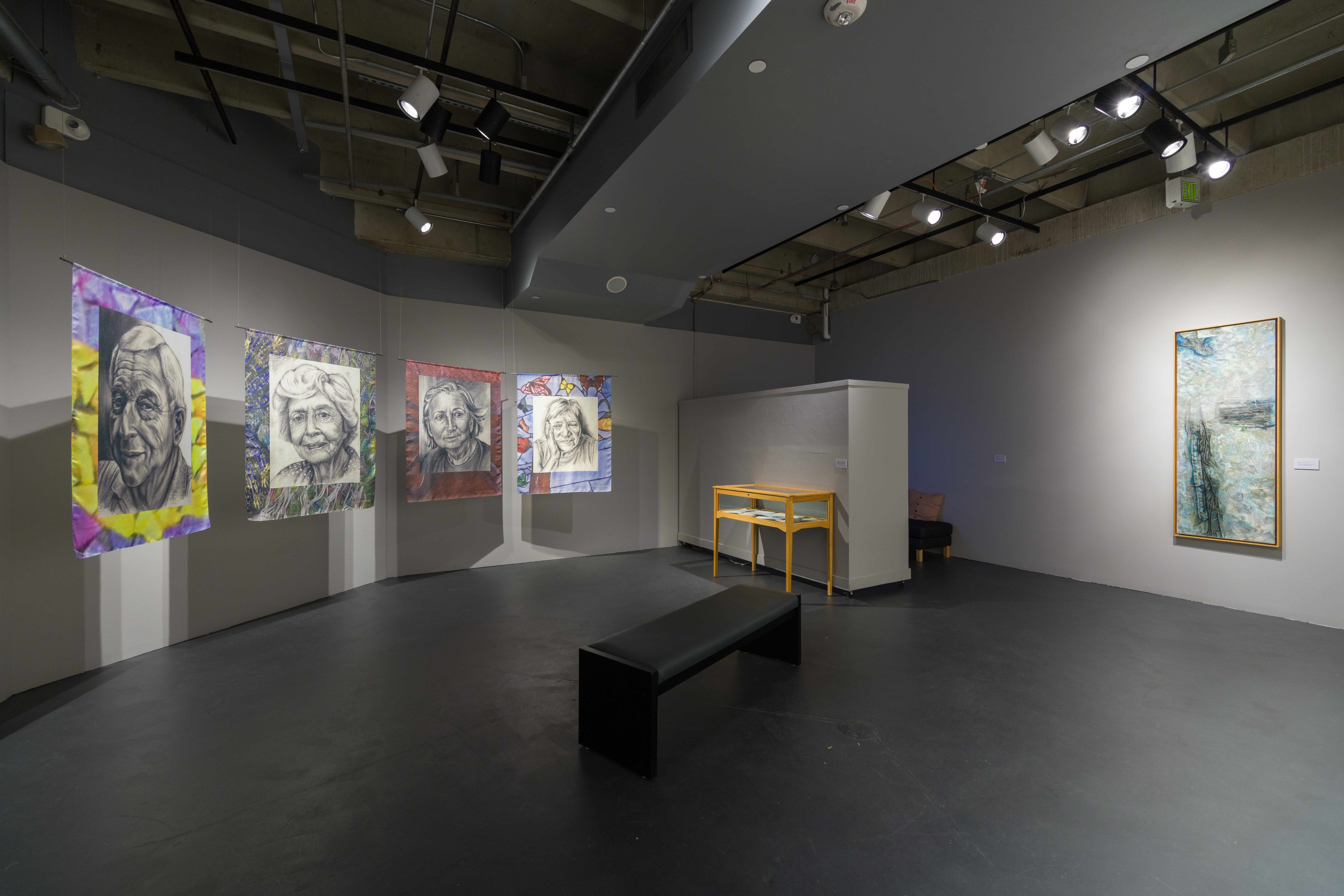
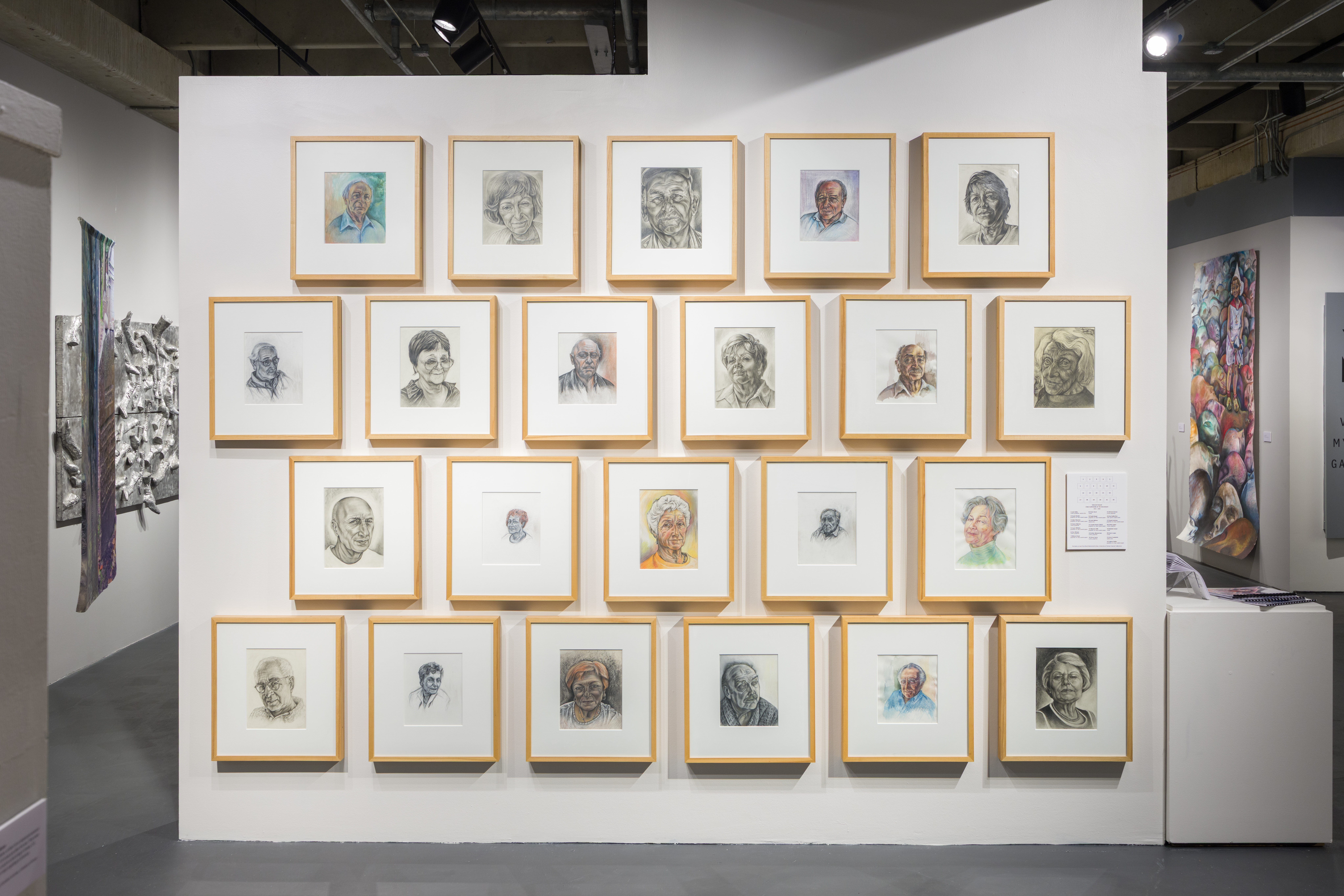
Portraits of Child Holocaust Survivors
This project was sparked by a discussion on racial stereotypes and aging in my figure painting class. After wrestling with the subject of the Holocaust in my art beginning in graduate school, I had finally found a way to deal with a subject of such magnitude through the simplicity of a drawn portrait.
Between 2003 and 2008 I found and interviewed twenty-five people living in Denver, Chicago, and Los Angeles. In 2022 I interviewed and drew my last survivor, Trudy Strauss, who was 106 years old.
Finding people to pose was a challenge at times, especially in the beginning. I found people by networking through friends, family, and colleagues. I also met survivors in chance encounters, including at my son’s Wednesday night orchestra rehearsals and at an antique store. One survivor, Jakov Bubruesk, sold hotdogs from a cart for many years on the University of Denver campus and was beloved by students, faculty, and staff. Some of the people described the reasons they survived as chance, fate, or luck. I see a parallel in the serendipitous way I found survivors.
Drawing is an ideal medium, because it can be very intimate and can capture the intangible qualities of an individual. A drawing, with all its quirky lines, marks, and smudges, is a document not only of the subject, but of the artist as well. The artist becomes a witness, and as the number of survivors have greatly dwindled, artists can play an important role in the documentation of the Jewish Holocaust.
The goal of this project was to create portraits of people who feel as though they continue to exist at this moment in time. I was never interested in making people look like victims or heroes. I was interested in capturing their individuality and their humanity and in depicting real people who lived both extraordinary lives and very ordinary lives.
“The Holocaust in its enormity defies language and art, and yet both must be used to tell the tale” – Ellie Wiesel
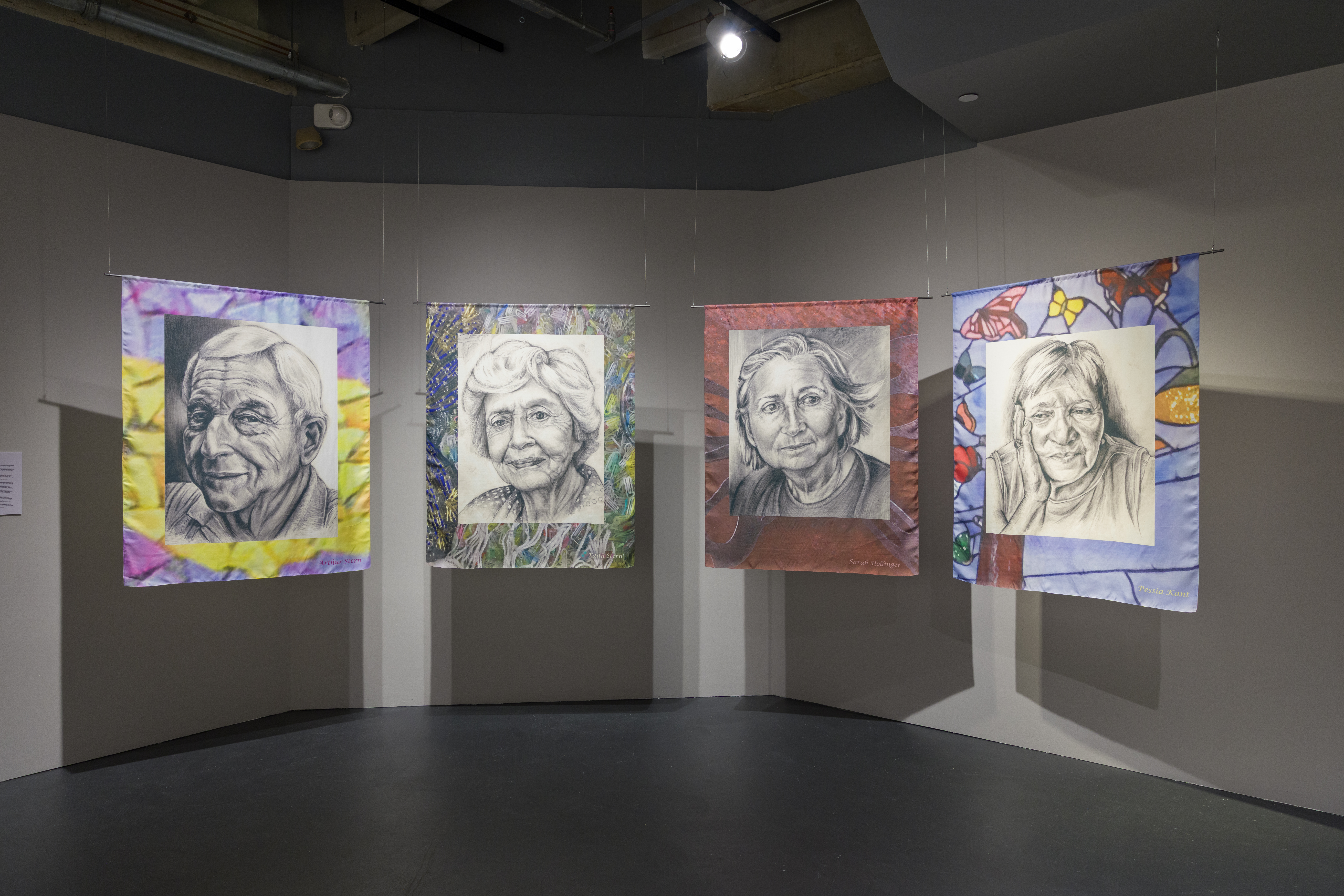
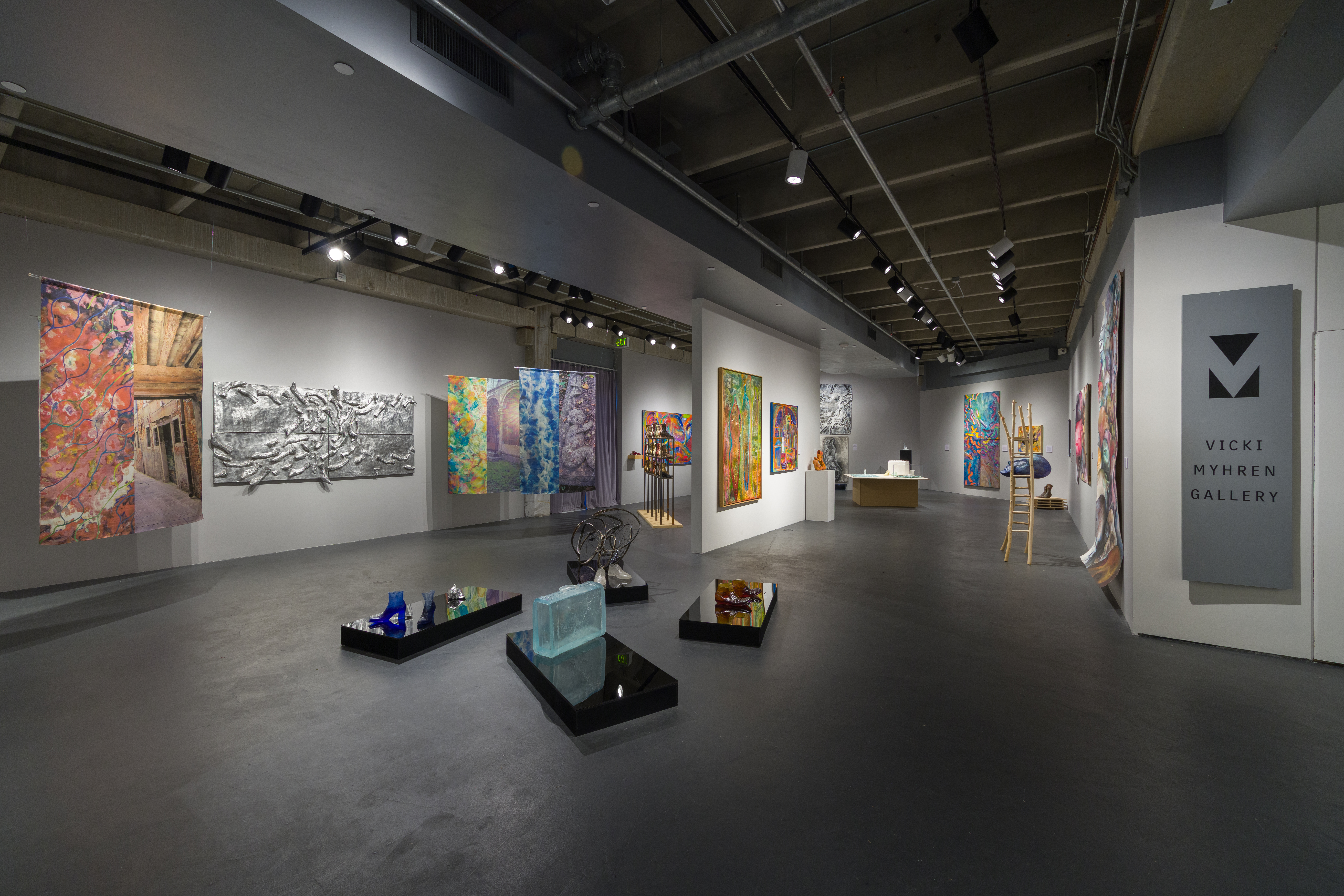
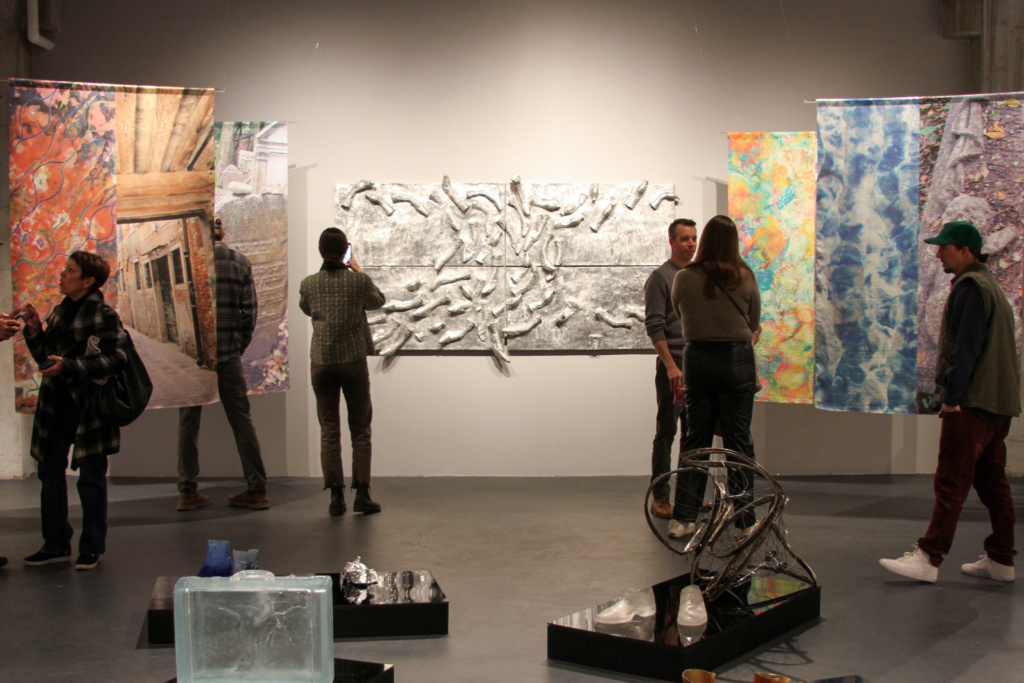
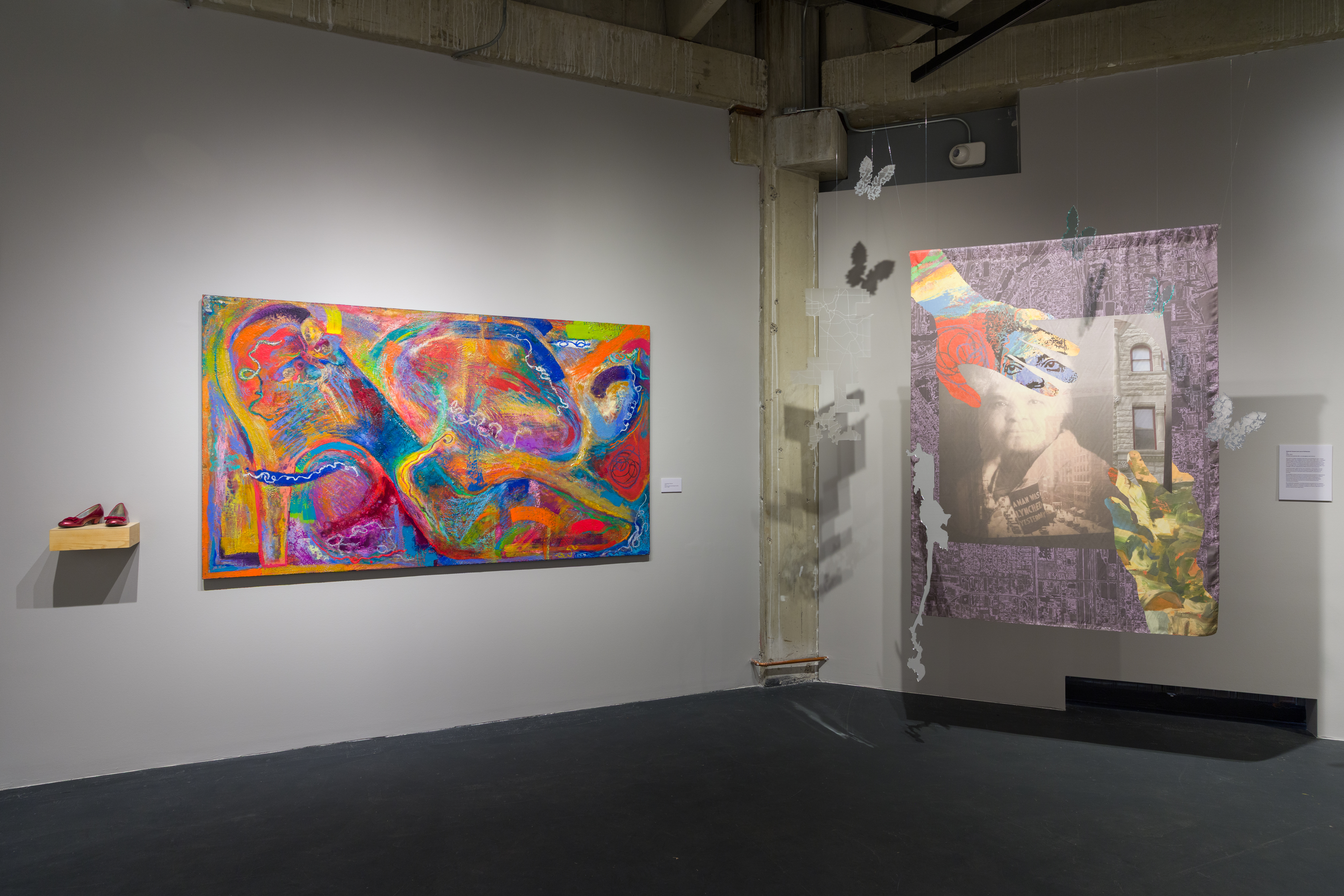
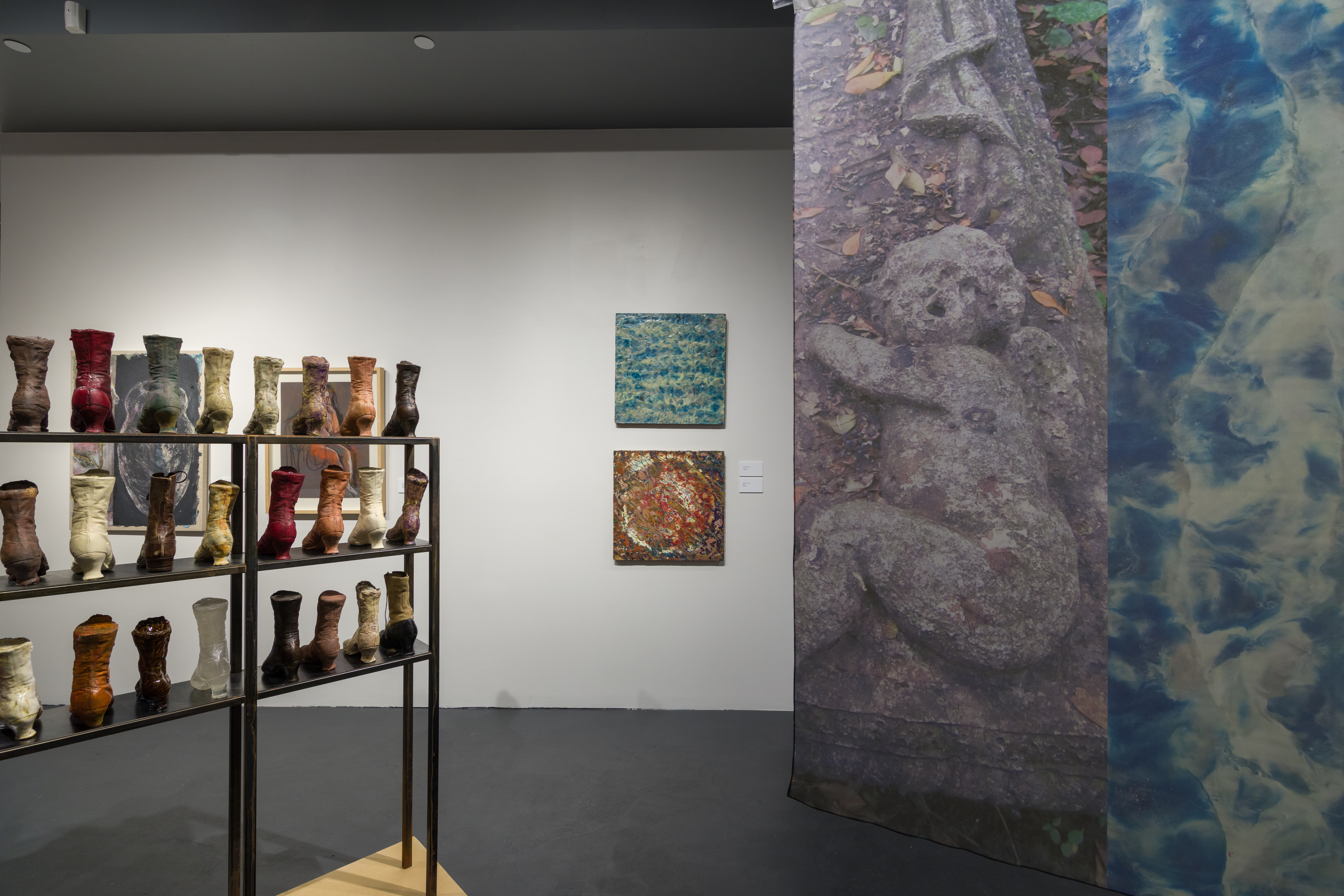
May Their Memory Be a Blessing, 2026, Digital prints on silk twill
The four portrait drawings reproduced on the fabric are in the permanent collection at the Holocaust Art Museum at Yad Va Shem Holocaust Memorial, Jerusalem, Israel. The colorful borders around the portraits are details from photographs I took of the Children’s Holocaust Memorial at Whitwell Middle School in Tennessee. The memorial includes a box car used in the Holocaust to take people to their death. Additionally, the school has the largest Holocaust Library in the Southeastern U.S.
Twenty-five years ago, the Whitwell Middle School began a Holocaust education program. Students discovered that a Norwegian Jew invented the paperclip and that Norwegians wore paperclips on their lapels as a silent protest against the Nazi occupation. The students collected paperclips and received international attention, resulting in paperclips being sent to the school from around the world. The making of the memorial is documented in the award-winning film Paper Clips (2004).
The memorial’s box car is now filled with over eleven million paperclips, representing the Jews and other people killed during the Holocaust. When I went inside the dark space of the box car, I was moved by the paperclips’ sparkling beauty. The memorial is a place of reverence, and people from around the world visit and leave personal mementos. Surrounding the box car is a garden of mosaics and sculptures of butterflies. There is a tall, polished-granite obelisk with a colorful metal butterfly on top. Carved in the stone is the poem “Butterfly”, written by 15-year-old Pavel Friedman when he was in the Terezin concentration camp for children. At the base of the obelisk is carved, “THIS GARDEN IS DEDICATED IN MEMORY OF THE 1 ½ MILLION JEWISH CHILDREN WHO PERISHED DURING THE HOLOCAUST 1939-1945.”
I spent time in the memorial garden surrounding the box car examining its massive undercarriage and found its eroded areas to be visually fascinating. I took many photographs of the interior and exterior of the box car. Later, back in Denver, I designed large, montage prints combining all twenty-six portraits with photographs I took at theChildren’s Holocaust Memorial. The twenty-six montage prints are now on display at Whitwell Middle School.
I am indebted to artist Laurel McMechan, who helped create the large fabrics and the photo montages, and to retired DU English Professor Margaret Whitt, who first took me to see the Children’s Holocaust Memorial in the small town of Whitwell, Tennessee.
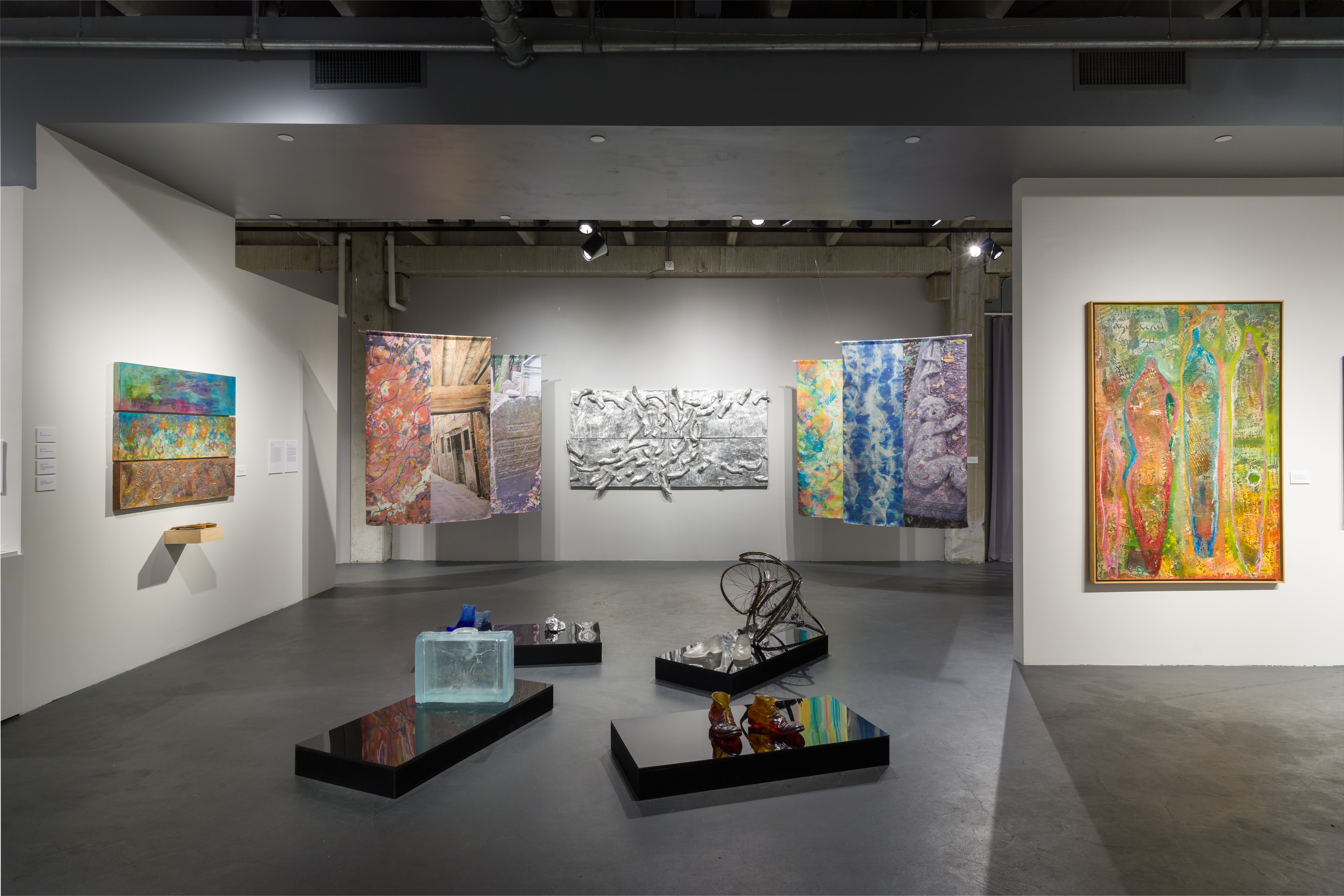
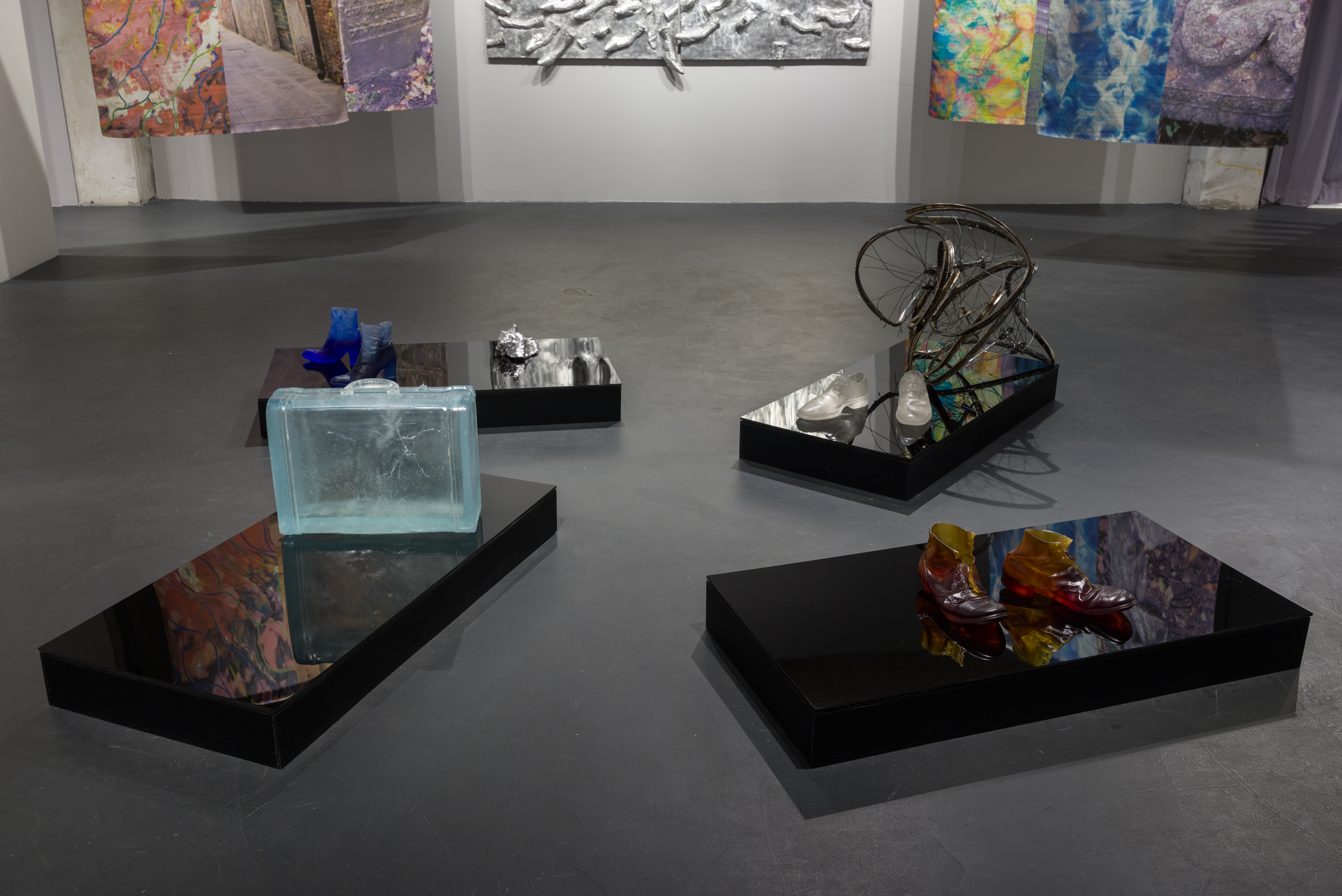
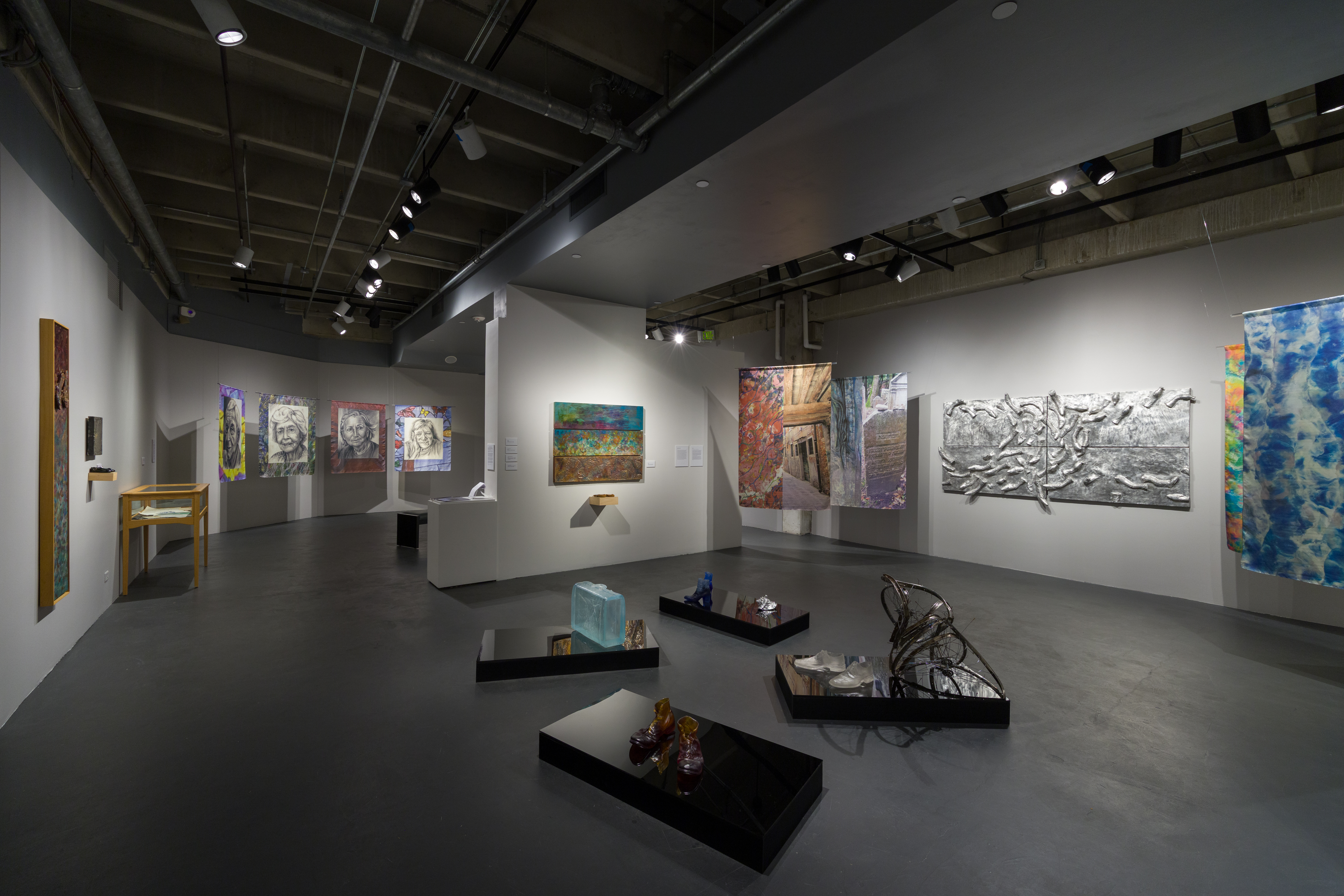
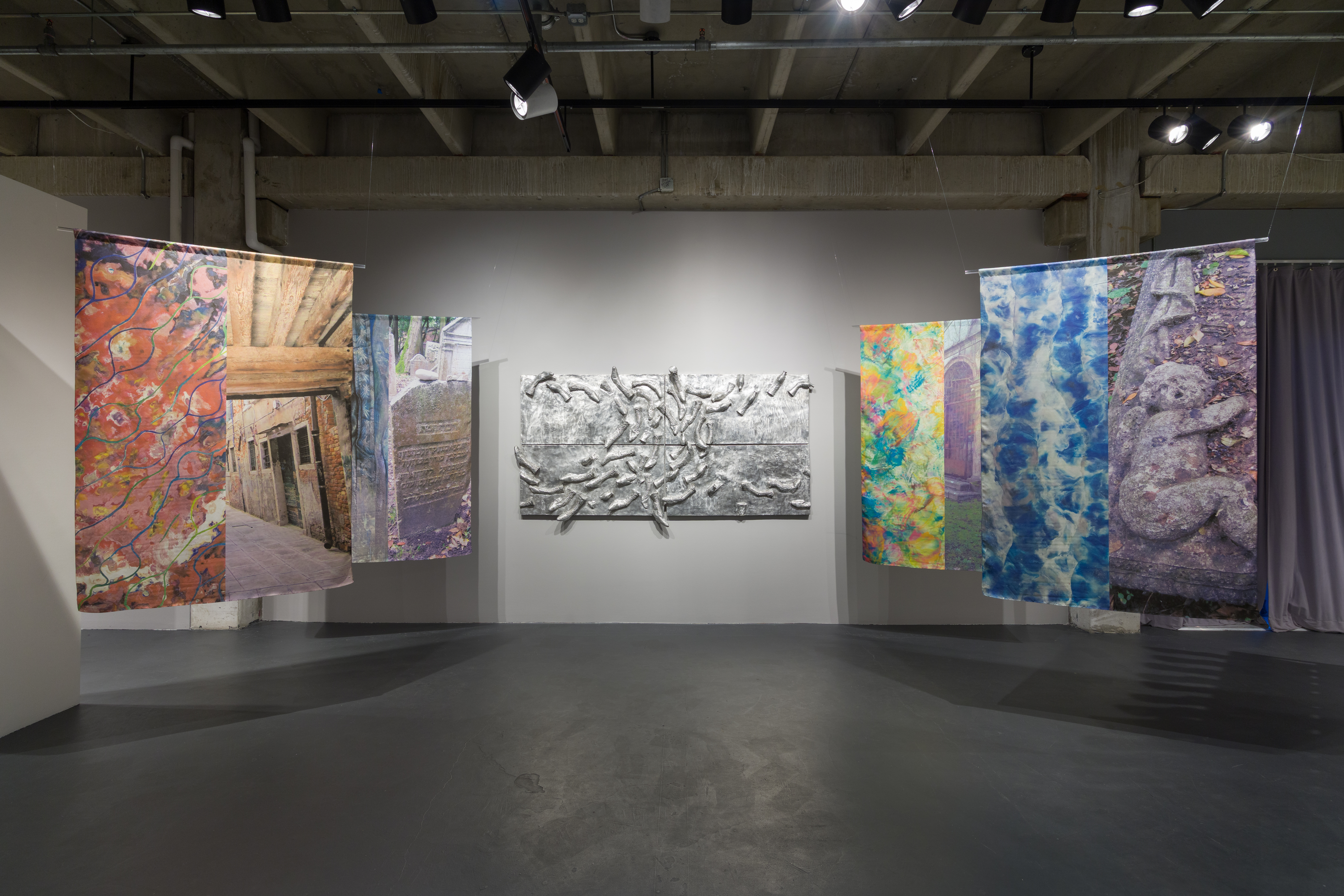

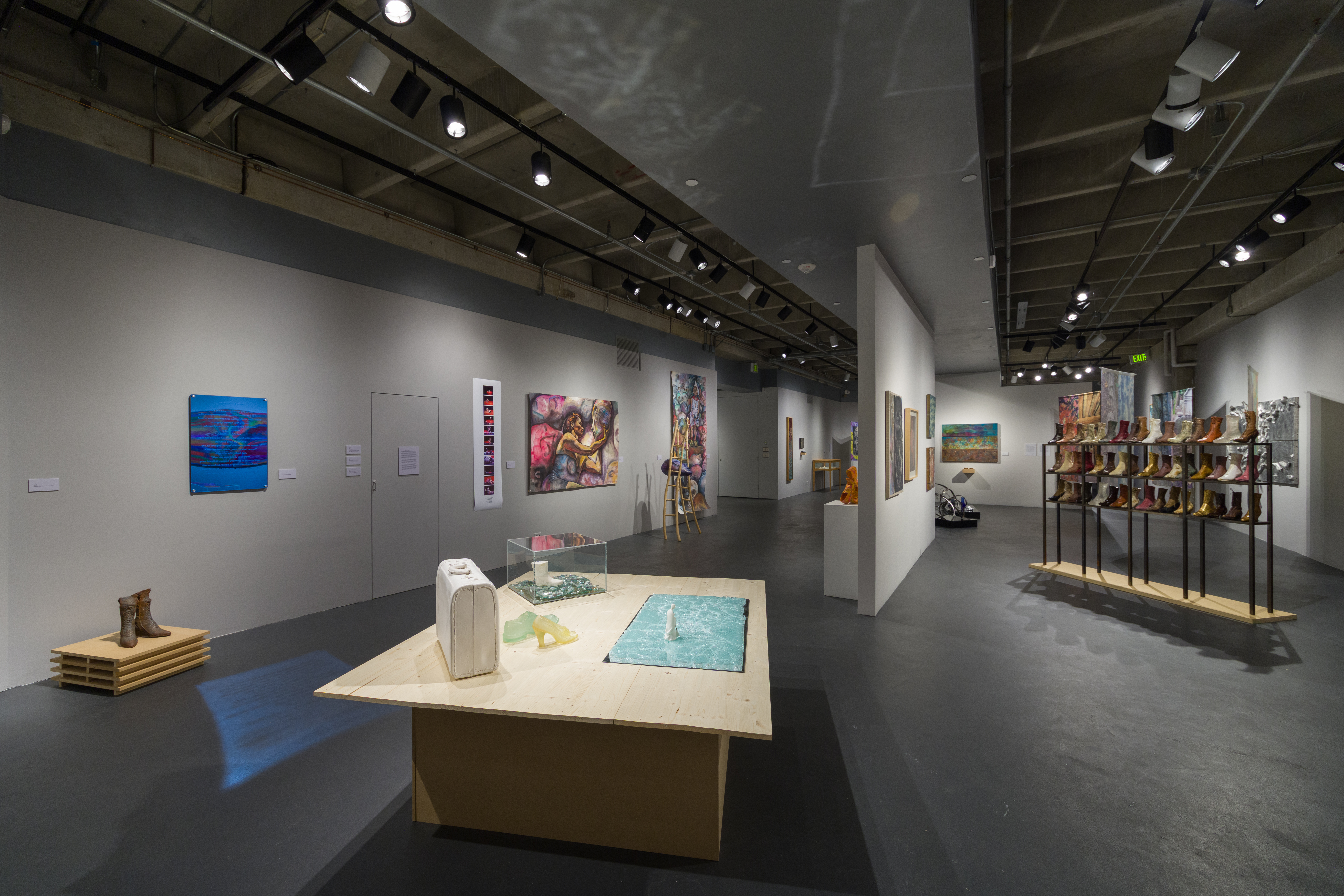
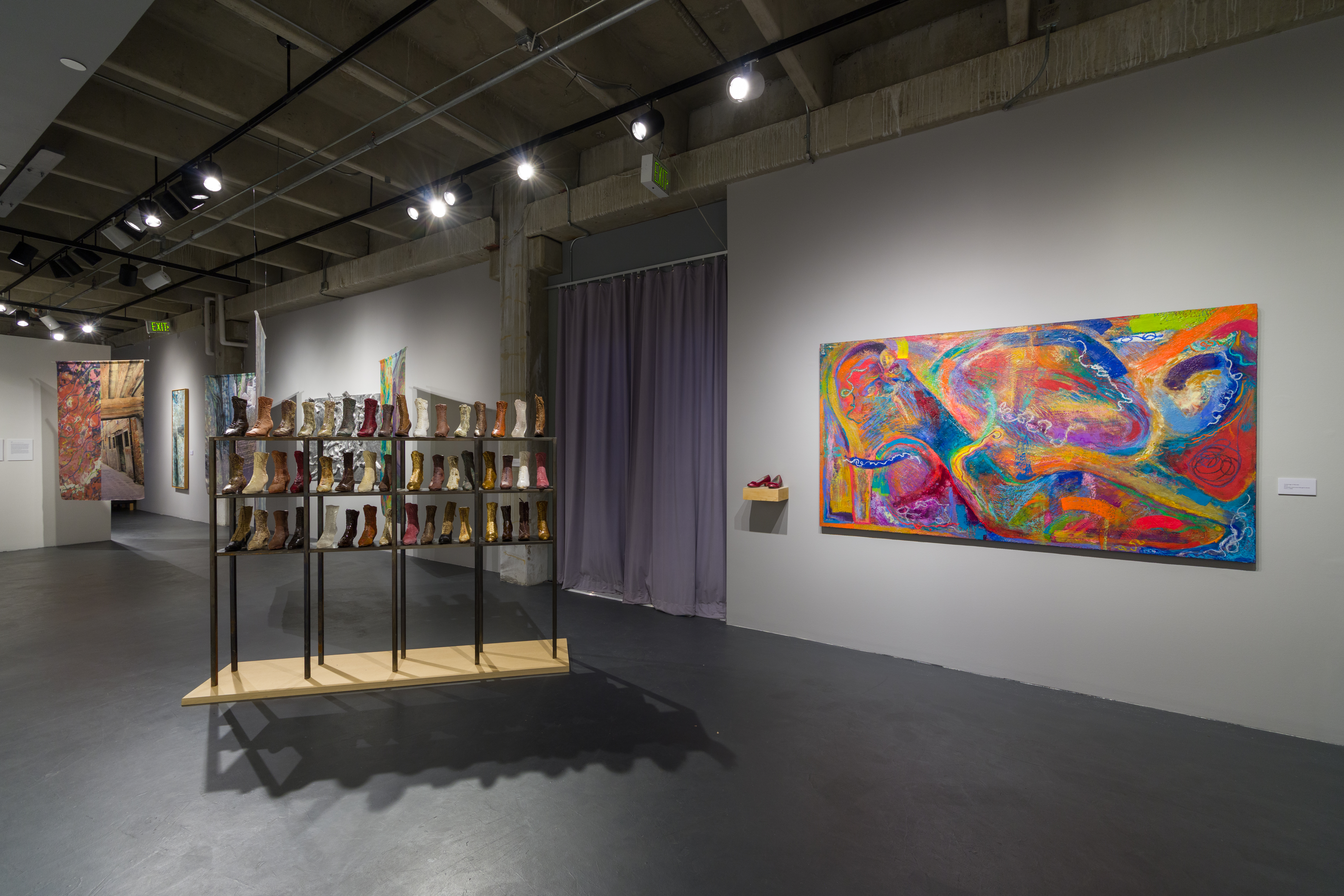
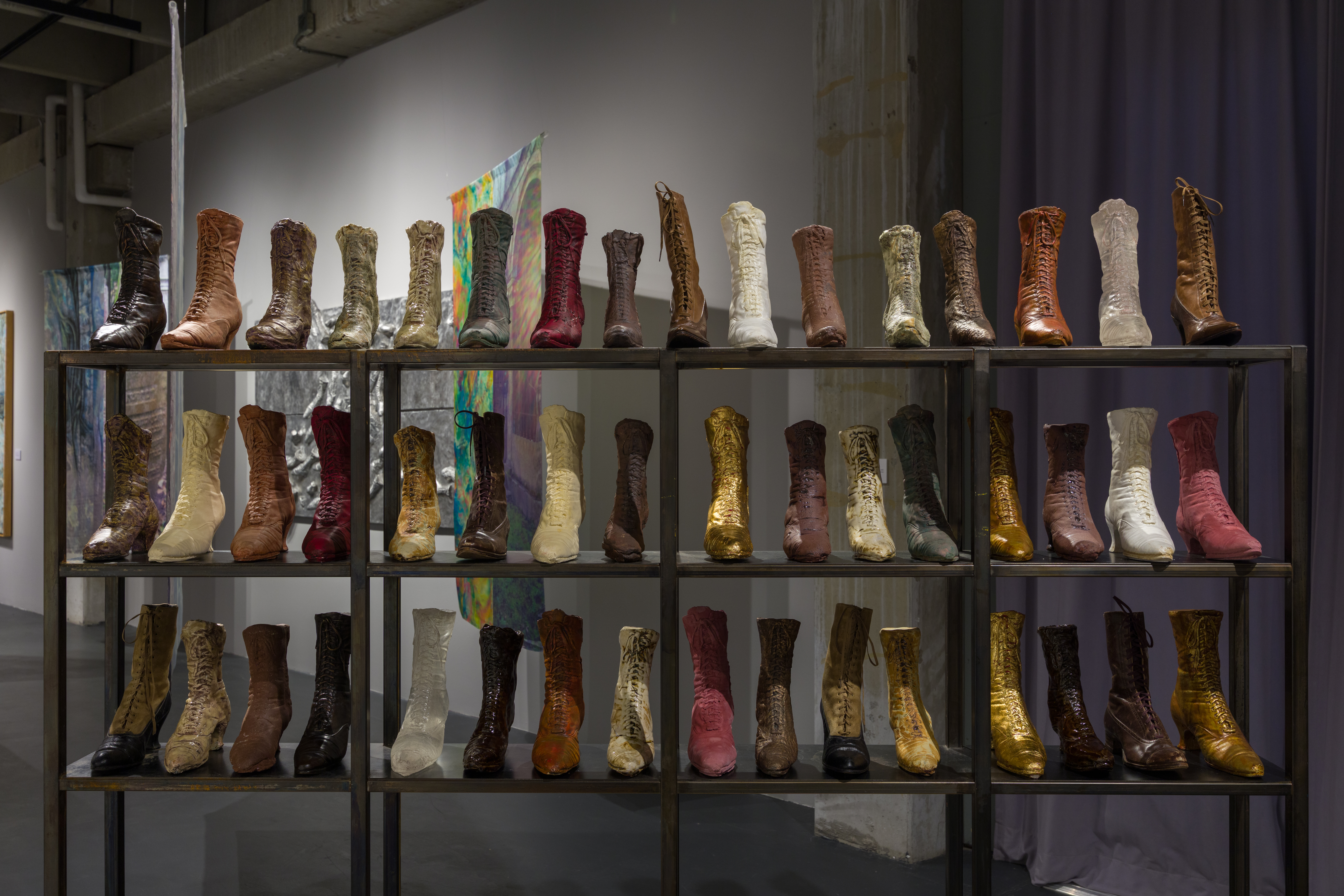
Echoes, 2014, Women’s boots from c. 1900 cast in aluminum
Echoes was exhibited internationally in 2017 at the Venice Jewish Museum in Italy, located in the Jewish Ghetto. Both the museum and the Ghetto are over 500 years old. I created the sculpture in Denver, but exhibiting Echoes in a location with such a rich history gave the piece new significance and depth.
Materials have meaning, and the use of metal in Echoes brings attention to the history of the Venice Jewish Ghetto. The Ghetto was once the location of a foundry that was torn down to create the Ghetto. The color of aluminum is reminiscent of Jewish ceremonial objects that are primarily made of silver. The sculpture’s reflective and polished metallic qualities can also suggest water’s depth and Venice’s surrounding and interconnected waters: the lagoon, the Adriatic, and the Mediterranean.
Echoes includes approximately fifty boots that were cast from one pair of women’s boots worn during the 1900s. Venice is travelled by foot, and the sculptural boots invoke the people who have walked its streets for centuries. The shoe forms also resemble groups of people, both Jews and non-Jews, who for centuries have traveled and migrated in and out of Venice by boat. Over my many stays in Venice, these shoe forms have come to represent all of humanity and the shared human experience of migration for survival and evolution.
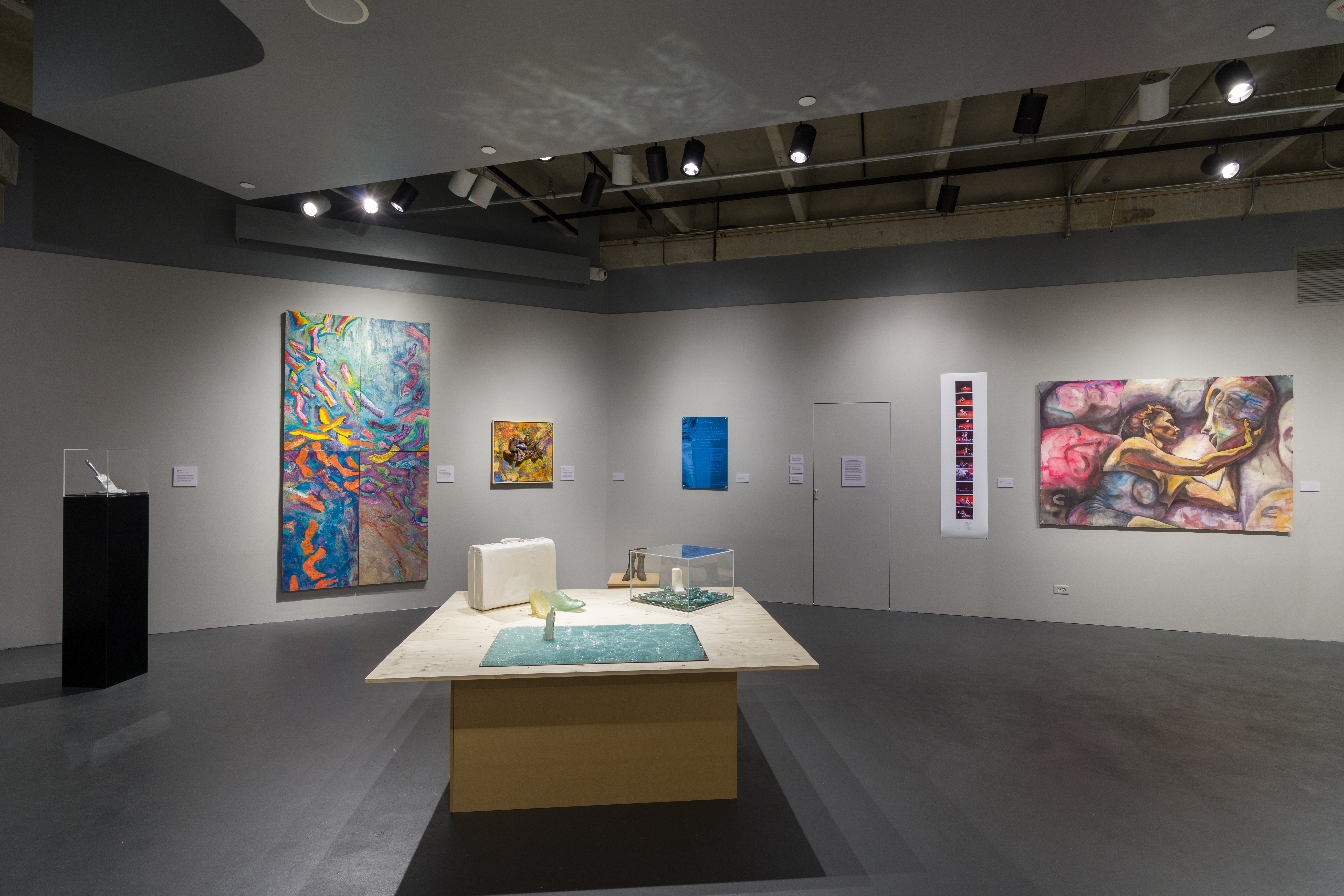
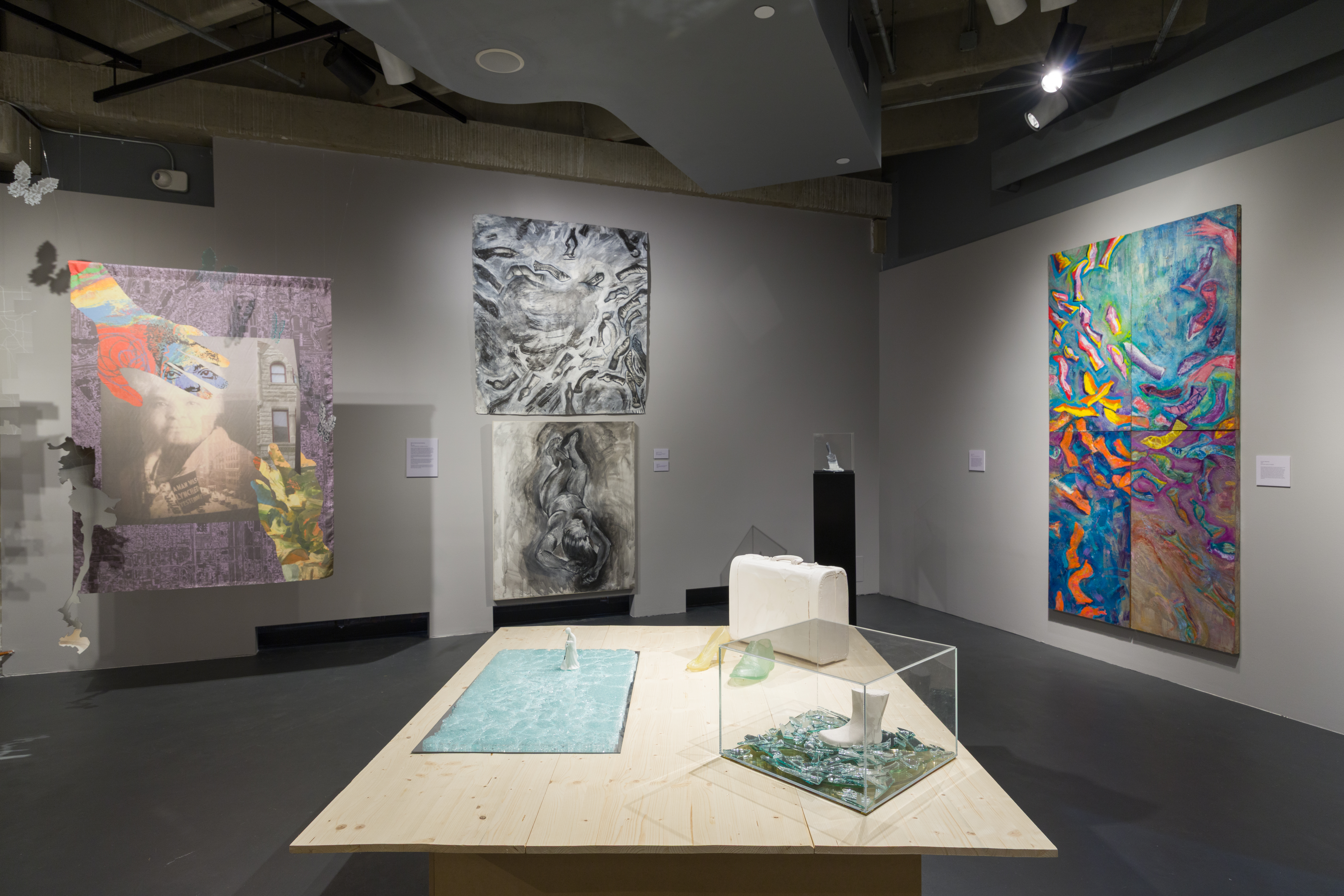
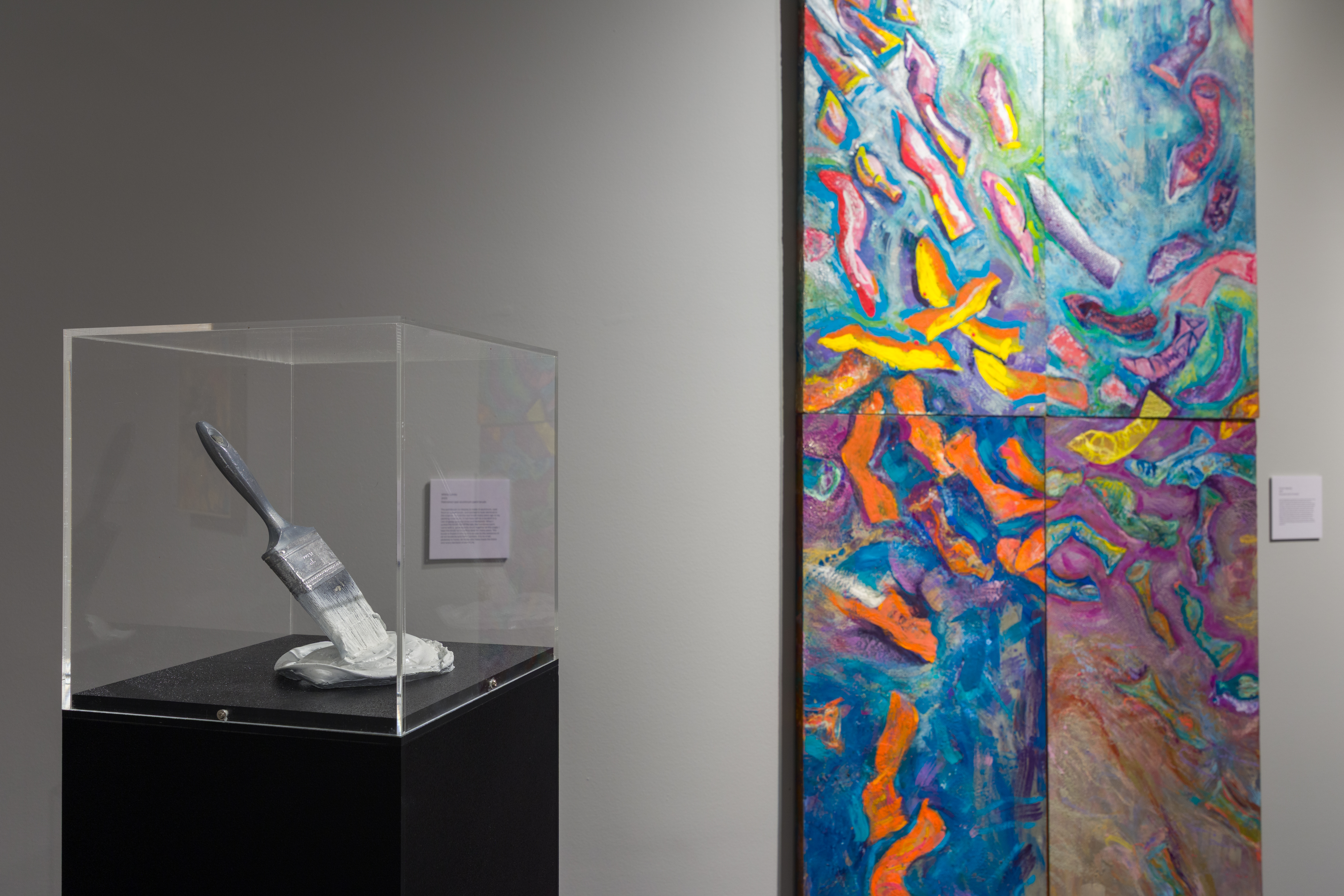
Within Limits, 2023, Patinated cast aluminum paint brush
The paintbrush on display is made of aluminum, cast from an actual brush, and painted to look identical to the original. I found the real brush many years ago in my painting classroom. It had been left by a student in a can of gesso and had dried and hardened. When I pulled the brush out of the can, the hardened paint came with it, permanently stuck together at this angle. I kept the brush on my office desk for many years. The brush is frozen in time and is an ode to the resilience of all art students and their teachers. It is on a tall pedestal to honor all those who have made the brave and scary decision to be artists.
Statue of Liberty, December 30, 2018
Stepping off the subway at Battery Park, it was chaos as hundreds of people frantically looked for tickets for ferries to the Statue of Liberty. In the craziness a woman sold me a ticket claiming the line would be an hour instead of four, but I ended up on a tour bus that drove to New Jersey to catch the ferry. The boat was old and tippy with loud blasting hip-hop music and scraggly Christmas decorations and mirrored disco balls. It was a party boat with bars on each level, and the captain took a slug from a bottle when he began to steer. It was cold and windy, but I went to the top near the prow to get a good view. People spoke Spanish, Russian, and Hindi. There was an excited British couple, and a few bewildered Americans like me. At some point I gave in to the mayhem and accepted that this ferry ride was a celebration of the true America.
When we reached Ms. Liberty, people surged to the railing, dancing and singing, while others were silent or took photos and selfies. As we slowly passed the sculpture, I was awestruck by its massive magnificence and breathtaking beauty; the sculpture was so unexpectedly gorgeous. She was definitely a calm, confident woman, a mother, and she embodied something that is in all great art: the ability to enable the viewer to aspire to their own greatness, to aspire to their higher self.
Surrounded by reveling immigrants, tourists, and Americans, I smiled for my great grandmother Tilly who came to America at twelve. Tilly is the mythic matriarch of our family, who knew Sholem Aleichem, author of Fiddler on the Roof, who had to shave her head and pretended to be a boy on the boat crossing the Atlantic and worked in a sweatshop and never learned to read. Tilly’s journey is interwoven into the memory and psyche of our family of artists, musicians, dancers, actors, doctors, lawyers, engineers, educators, social workers, and activists. Tilly’s journey is also interwoven into the immigration, emigration, and migration memories of all families now and from the beginning of time.
All photos by Wes Magyar
All are invited to join the opening reception on Thursday, January 22 from 5-8 PM. Click the button below to learn more.