Provenance Research at DU
Provenance Research at DU
What is Provenance Research?
Provenance research is the study of an object’s ownership history. Establishing provenance can shed light on broader historical narratives that affected the life of the object, such as histories of taste, the art market, and the idea of ownership itself. Knowing more about the origin of a work of art can also help us understand the artist’s intention and enrich our interpretation of the work’s meaning and lasting influence.
There are many types of provenance research depending on the type of object and its history, such as archeological and ancient art, Nazi-looted art, religious and cultural objects, Indigenous arts, and more. Each area of provenance research references different laws, ethical guidelines, and types of sources. Research sources can include exhibition and publication histories, academic scholarship, records from dealers, collectors, and auction houses, archives from newspapers and obituaries, and digital red-flag lists and lost art databases.
Objects rarely have a complete provenance. The missing information might be due to lost or undiscovered documentation or the historic transfer of an object without written records. However, new information is discovered every day! In some cases, research into the provenance of an object uncovers changes in ownership caused by unethical or illegal practices, such as theft, coercion, or violence.
Conducting provenance research is not only important to help us learn more about our objects, but also because institutions have a moral and legal obligation to determine whether the objects in their collection have been legally and ethically acquired.
Provenance Research at DU
The University of Denver Art Collection (UAC) is committed to ethical stewardship and transparency in our collection and collecting practices. We conduct provenance research on objects currently in our collection, new acquisitions, and potential acquisitions.
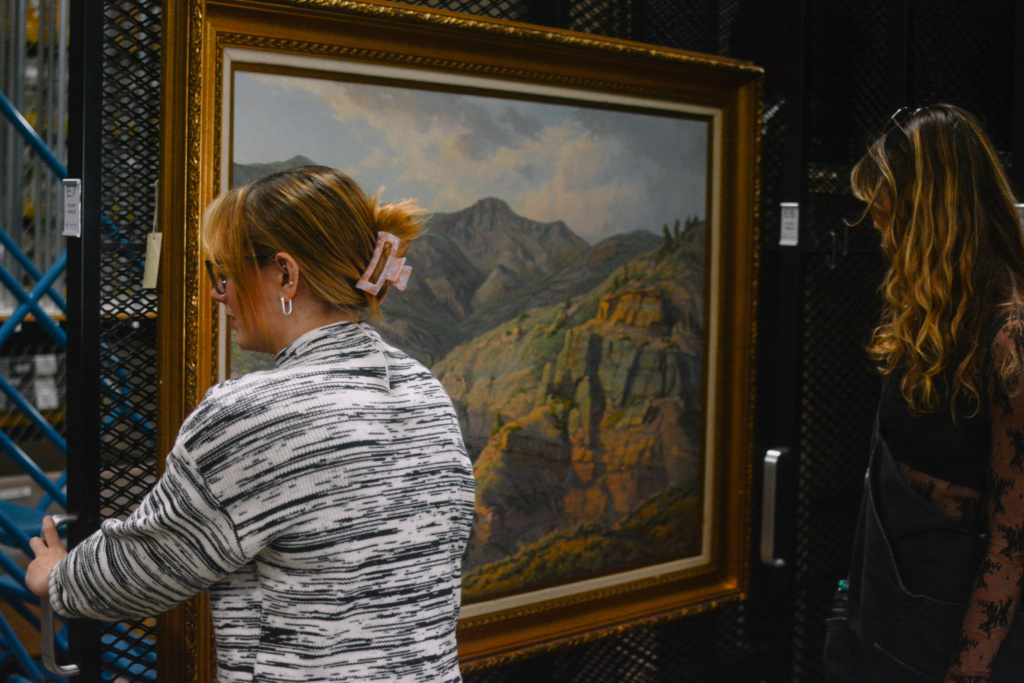
The majority of our provenance research is carried out by graduate students in consultation with university, local, national, and international advisors. The projects provide students the opportunity to gain experience applying national and international law, museum best practices, and object-based research.
We are doing some website construction. If a page does not open or a link does not work, check back in soon!